

What Affects the Duration of Varicocele Surgery?
One of the most critical questions varicocele patients ask during pre-operative consultations is: "How long does varicocele surgery take?"
Since patients plan this surgery on an outpatient basis, the duration of anesthesia and when they will wake up to go home are matters of great curiosity. There is no fixed duration for varicocele surgery; three main factors determine the length of the operation:
- The surgical technique used (Conventional, Laparoscopic, or Microsurgical?)
- Whether the surgery is Unilateral (one-sided) or Bilateral (both sides)?
- The surgeon's experience and dexterity using the surgical microscope.
Duration of Microsurgical Varicocele Surgery
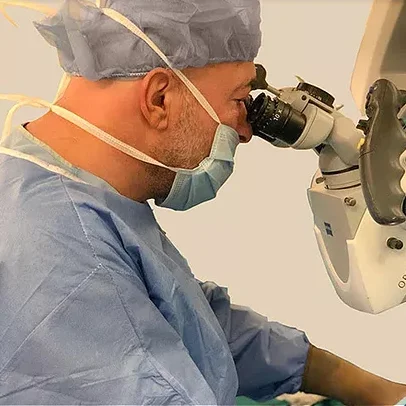
In microsurgical varicocele surgery, which is recognized as the gold standard and most reliable method, the surgeon must completely mobilize the spermatic cord in the groin, place it under a high-resolution operating microscope, and perform the dissection/ligation process there.
All arteries, lymphatic channels (which are transparent and barely visible to the naked eye), and dilated veins (capillary varices) are examined, isolated, and ligated individually under 10x to 20x magnification.
- Unilateral (Left or Right-Sided Operation only): Dissecting a single spermatic cord under the microscope and ligating the veins takes an average of 45 minutes to 1 hour (extending up to 1 hour and 15 minutes in some cases, depending on the complexity of the vascular network) depending on the surgeon's experience.
- Bilateral (Both Sides): For patients diagnosed with varicocele in both the right and left groins, separate incisions are made on both sides. In this case, the surgery duration automatically ranges from 1.5 hours to 2.5 hours.
It should be noted that the microsurgical method takes much longer than conventional surgery. A physician performing conventional surgery might complete it in just 15 minutes because they ligate all the tissue together. However, the probability of complications such as recurrence, testicular atrophy, and severe swelling (hydrocele) is extremely high in conventional procedures.
For us, the priority is not "how quickly we finish the surgery", but "ensuring that we do not damage any arteries and do not leave behind any pathological veins (even the capillaries)."
The Patient's Hospital Timeline: How Much Time Passes From Admission to Discharge?
Planning for just a 1-hour stay based solely on the surgery's duration is misleading. The patient's surgical journey is a comprehensive process from admission to discharge:
| Stage | Average Duration | Explanation |
|---|---|---|
| Admission and Preparation | 2 - 3 Hours | Blood tests are drawn, an ECG is performed, the anesthesiologist conducts a consultation, and the patient waits in their room. |
| Anesthesia Induction | 15 Minutes | After entering the operating room, this involves intravenous sedation and mask respiration. |
| Microsurgical Surgery | 1 - 2 Hours | The surgical procedure itself (varies based on unilateral or bilateral status). |
| Recovery Room (Waking Up) | 30 - 45 Minutes | The post-operative recovery room where you are monitored until you are fully awake. |
| Post-operative Ward Rest | 4 - 5 Hours | No food or drink is allowed during the first few hours. Afterward, light liquid food is served and the patient takes their first walk. |
| Total Hospital Stay / Discharge: | The evening of the same day or the following morning. | |
What Happens After Discharge?
If the surgery is performed early in the morning at our clinic, 90% of patients are discharged on the same day and do not need to stay overnight. This is the first step of a very comfortable post-operative recovery process. Patients traveling from out of town or abroad can return to their hometowns in their private/family vehicles (provided they do not drive themselves).
Differences Between Local, Spinal, and General Anesthesia
The standard in Turkey and worldwide is to perform microsurgical varicocele surgeries under General Anesthesia (Full Sedation/Sleep). This provides comfort, aids stress management, and allows the surgeon to perform microscopic movements with ease.
While you are in a deep sleep, your muscles relax, ensuring no movement at the surgical site, which allows the surgeon to safely ligate tiny veins under 15x magnification. In spinal or local anesthesia, patient movement or anxiety can cause the surgeon to lose focus and depth of field in the microscope.
Nevertheless, for high-risk cardiac patients, patients with severe anesthesia contraindications, or those with weak lung capacity, regional anesthesia from the waist down (Spinal) is a safe alternative. Regardless of the method, the plan is always for the patient to "stand up and walk 4-5 hours after surgery, and rest in their own bed that night."
Scientific References and Bibliography
This content has been prepared for medical accuracy by referencing international guidelines in the fields of urology and andrology, as well as clinical studies published in peer-reviewed medical journals.
- Scholarly Article: Goldstein, M., et al. "Microsurgical inguinal varicocelectomy: an artery and lymphatic sparing technique." The Journal of Urology, 1992. [Source/Link]
- AUA/ASRM Guideline: Schlegel, P. N., et al. "Diagnosis and treatment of infertility in men: AUA/ASRM guideline." The Journal of Urology, 2021. [Source/Link]
- EAU Guidelines: Salonia, A., et al. "EAU Guidelines on Sexual and Reproductive Health." European Association of Urology, 2024. [Source/Link]
This content was prepared by
Prof. Dr. Teoman Cem Kadioglu
Urology and Andrology Specialist