

Varicocele Symptoms and Clinical Findings
Varicocele symptoms present a wide spectrum that varies from patient to patient. As in many branches of medicine, the existence of a disease does not always mean that the patient feels an obvious complaint, pain, or discomfort (i.e., presents symptoms). The disease, which we define as the enlargement of the veins inside the scrotum (testicular sac), can cause intense testicular, groin, and lower abdominal pain that makes daily life quite difficult for some patients, while it can exist silently for years without showing any symptoms (asymptomatic) in a significant group of patients.
In these silently progressing (asymptomatic) cases, patients often learn for the first time in their lives that they have varicocele as a result of ultrasounds taken or routine manual examinations performed when they apply to andrology/urology clinics with the complaint "We got married but we cannot have children." Its insidious nature is the most dangerous aspect of this disease, showing that it is a health problem that requires regular specialist examinations starting from puberty without being too late.
The Danger of Silent Varicocele (Asymptomatic Varicocele)
The fact that the disease does not cause pain or visible swelling does not mean that the inside of the testis is safe. Even if varicocele does not present external symptoms, it can disrupt sperm DNA integrity due to increased "oxidative stress" and "increased intratesticular temperature" at the microscopic level, leading to infertility and, over time, testosterone deficiency. Going to a physician only when there is pain is one of the most common mistakes made in andrological diseases.
Most Common Varicocele Symptoms (Complaints)
In varicocele cases that are not asymptomatic, meaning they present clinical complaints (symptoms) externally, a few or all of the following symptoms can be detected:
1. Feeling of Heaviness and Dragging in the Scrotum (Testicular Sac)
This is one of the most frequently reported specific complaints in varicocele cases. Enlarged veins (venous plexus) cause blood to easily pool below due to the effect of gravity (venous pooling / stasis). This blood pooling creates a mechanical dragging sensation. The patient usually describes this condition to the physician with sentences like, "It feels as if my testicles have become heavy," "They are being pulled downwards," "There is a feeling of fullness in my scrotum," or "My testicles hang down like a heavy sac."
2. Dull and Persistent Testicular Pain (Orchialgia)
The type of pain caused by varicocele is generally not sharp and stabbing; on the contrary, it is dull (mild but uncomfortable and persistent) in nature. This pain is caused by the pressure exerted by the enlarged veins on the nerve tissues around the testis, the effect of increased temperature, and the tissue irritation created by accumulated toxic blood metabolites in the tissues.
Characteristic features of varicocele pain:
- When waking up in the morning and resting in bed, the pain is very minimal or non-existent (since gravity is eliminated and blood flow is normalized).
- The pain worsens noticeably as the day progresses, in the afternoon or towards the evening.
- Standing for long periods (for example, in those who work on their feet such as teachers, surgeons, security guards, etc.), lifting heavy objects, or intense physical exercises (weight training, running) bring the pain to its peak.
- When the person lies flat on their back and goes to rest, the pain gradually disappears or decreases as the blood pooling resolves.
3. Visibly Apparent or Tangibly Felt Vein Convolutions ("Bag of Worms" in the Scrotum)
Especially in Grade 2 and Grade 3 moderate to advanced stage varicoceles, the clearest physiological finding is that the veins become visible under the skin. Just as we think of how thickened and bruised varicose veins appear on the legs of older people, the same structure is present in the scrotum. Patients may notice swollen, purplish/greenish rubbery veins, sometimes resembling spaghetti twists or small worms, at the top of the scrotum while showering or dressing.
In Grade 3 cases, the veins can be directly seen from the outside without the patient doing anything, while in Grade 2 cases, when the patient strains (performs the Valsalva maneuver), veins of these sizes are easily felt and palpated with the fingers.
4. Decrease in Testicular Size or Visible Asymmetry (Testicular Atrophy)
In every male anatomy, the resting position of the testicles is slightly asymmetrical (e.g., the left testis sits slightly lower than the right, which is completely normal). However, when it comes to volume (size), the situation changes. A varicocele that gradually worsens and remains untreated for many years slowly starts to kill the cells inside the testis due to factors such as increased heat, high oxidative stress, and the inability of the testicular tissue to receive nourishment (hypoxia). The testicular tissue wastes away (atrophy) and a reduction in testicular volume is observed.
Looking in the mirror and seeing that the left testis (varicocele is mostly on the left) is obviously smaller than the right, or noticing that it is shriveled or has shrunk to the size of a hazelnut, is the most dangerous, painful, and unfortunately, most advanced finding of varicocele. Especially in developing adolescent children, the stopping of healthy growth and remaining small of the testicles is a very important warning sign. The diagnosis of testicular atrophy must be made definitively only with a special bead-like medical measuring device called an "Orchidometer" or with Testicular Ultrasonography.
Is Infertility a Symptom?
Although "infertility" in medical terminology is a 'result (complication)' rather than a symptom, it is the biggest driving force in diagnosing varicocele. An adult who does not have the opportunity for a urological examination in his youth because he has no pain or swelling, starts his diagnostic journey with the question "Why can't we have children?" when he gets married and tries to have children with his spouse and cannot achieve this despite 1 year of unprotected intercourse. If the Spermiogram (Semen Analysis) performed by the patient shows a low sperm count, low progressive rapid sperm motility, or severely abnormal morphology (sperm structure), the number one physiological disorder that the physician will suspect is varicocele.
Can Varicocele Symptoms Be Confused with Other Diseases?
Not every patient who applies to the clinic with complaints of groin and scrotal pain has a varicocele. Other pathologies that cause swelling in the scrotum or pain in the groin and mimic varicocele are also frequently seen. These are:
- Hydrocele: It is the accumulation of fluid between the membranes around the testis. Instead of worm-like veins as in varicocele, there is a swelling in the form of a large, transparent, water-filled balloon.
- Inguinal Hernia: It is the sliding of intra-abdominal organs, especially bowel loops, down the inguinal canal into the scrotum. Sometimes, a very large mass appears upon straining and returns to the abdomen when resting.
- Epididymitis and Orchitis (Testicular Infections): It is an inflammation of the testis that causes very severe, sudden-onset, non-dull, stabbing pain. It can bring along sensitivity to touch and sometimes fever. It has nothing to do with the chronic pain of varicocele; it is an acute emergency.
- Spermatocele (Epididymal Cysts): These are harmless, benign fluid-filled cysts, either tiny or walnut-sized, filled with sperm in the ducts immediately adjacent to the testis.
What Should I Do If I Experience Symptoms? How is Diagnosis Made?
If you are experiencing any or several of the varicocele symptoms, the place to apply is Urology or, specifically, Andrology clinics. The GOLD STANDARD and the most critical part of varicocele diagnosis is undoubtedly the PHYSICAL MANUAL EXAMINATION. Unfortunately, in many hospitals today, manual examination is skipped, and a "Color Doppler Ultrasonography" is directly requested, and surgery decisions are made by rote based on the "vein diameter in millimeters" data written on the ultrasound report.
It should be known that in the manual "andrological examination" performed while standing, using the breath-holding and straining method, performing surgical repair on "Subclinical Varicocele" cases that the doctor cannot personally feel but the radiologist claims to see on ultrasound is not recommended by international guidelines, because these surgeries do not bring healing to patients (an increase in sperm quality or resolution of pain). The diagnostic process must always begin with the doctor's fingers in the examination room, and if present, a semen analysis and, if necessary, testosterone hormone profile should be obtained as supporting tests.
Summary
If you detect sagging or worm-like hard, enlarged veins in your testicular area, or if a rough pain reduces your quality of life, especially when standing for a long time, consult a specialist physician immediately. In Prof. Dr. Teoman Cem Kadioglu's clinic, your diagnosis is made as quickly as possible and in accordance with gold standards; when necessary, "Microsurgical Varicocele Surgery" is performed by the team with the most extensive case experience in Turkey, ensuring you regain your health.
If you understand the symptoms and are researching the treatment strategy, you can visit our Varicocele Surgery Processes and Varicocele Treatment Approaches pages.
Scientific References and Bibliography
This content has been prepared for medical accuracy based on international guidelines in the fields of urology and andrology and clinical studies published in peer-reviewed medical journals.
- EAU Guidelines: Salonia, A., et al. "EAU Guidelines on Sexual and Reproductive Health." European Association of Urology, 2024. [Source/Link]
- AUA Guideline: Peterson, A. C., et al. "Evaluation and management of the man with scrotal pain." The Journal of Urology, 2010. [Source/Link]
- ASRM Committee Opinion: Practice Committee of the American Society for Reproductive Medicine. "Report on varicocele and male infertility: a committee opinion." Fertility and Sterility, 2014. [Source/Link]
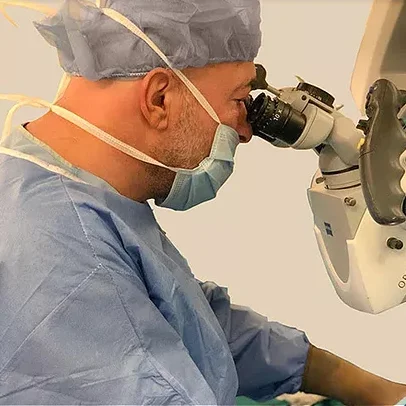
This content has been prepared by
Prof. Dr. Teoman Cem Kadioglu
Urology and Andrology Specialist
for patient education.