

Varicocele Pain (Orchialgia): Why Does It Happen and What Does It Feel Like?
Does varicocele cause pain? The medical answer to this question is definitely YES. Varicocele is one of the most common underlying pathological causes of complaints in patients who present to andrology clinics with chronic (long-term) pain in the testicular and groin area. Scrotal pain, defined in medical terms as "orchialgia," can severely disrupt the quality of life, leading to both physical fatigue and psychological anxiety.
However, one of the most important points in understanding varicocele pain is that varicocele does not necessarily cause pain in every patient. In thousands of patients, the condition progresses so "silently" that it directly damages sperm DNA and causes infertility without causing even the slightest ache for years (the Silent Varicocele phenomenon). Nonetheless, in painful varicocele cases, this pain has very specific biological causes and highly identifiable characteristics.
Is Every Testicular Pain Caused by Varicocele?
Absolutely not. The cause of sudden (acute), stabbing testicular pain that does not even allow touch is usually inflammation (epididymitis-orchitis) or testicular torsion, which is a dangerous emergency. On the other hand, varicocele pain is chronic (lasting for weeks or months) and is experienced as a heavy sensation or dull ache rather than a sharp, sudden pain.
Why Does Varicocele Cause Pain? (The Mechanism of Pain)
Just like varicose veins in the legs, the mechanism of this condition in the testicle is the dysfunction of the vein (venous) valves. While dirty (deoxygenated and loaded with metabolic waste) venous blood should be pumped against gravity directly up toward the heart, a backward flow (reflux) toward the scrotum and testicle begins because the valves are damaged. Consequently, the blood vessels in that area become engorged with blood far exceeding their normal capacity (pooling/venous stasis).
The mechanisms that trigger pain include:
- Mechanical Stretching (Pressure): The veins swollen with blood (pampiniform plexus veins) expand and exert mechanical pressure (compression) on the highly sensitive nerve networks around the testicle. The gradually heavier scrotum pulls down the connective tissues supporting the testicle and the spermatic cord, turning the sensation of heaviness into pain.
- Temperature Rise and Lack of Oxygen: The accumulation of blood in the scrotum raises the local temperature by a few degrees. Furthermore, the pooling of dirty blood makes it difficult for oxygenated blood to reach the tissues (hypoxia). Deprived of nourishment, overheated, and starved of oxygen, the testicular tissue triggers the pain pathways as a "danger signal."
- Exposure to Toxic Substances: Toxic metabolic wastes, which should normally be filtered out from the kidneys and adrenal glands, flow down into the testicle through the varicocele, irritating the surrounding tissues and stimulating chemical pain receptors.
What Kind of Pain is Varicocele Pain? Characteristic Findings
When listening to a patient's complaints, we expect to see the following characteristics to say, "Yes, this is a typical varicocele pain":
- A Dull and Deep Ache: Patients do not describe it as "a sharp, stabbing, or nail-like pain." Instead, they describe it as "a constant dull ache," "a heavy sensation pulling down toward my leg," or "fullness and throbbing."
- Increases Over Time (During the Day): In the morning, since the patient has been lying horizontally in bed for about 8 hours, the pooling of blood stops, and the veins drain. Therefore, varicocele pain is usually absent or minimal in the mornings. However, as the patient gets out of bed and goes about their daily activities, walking, or working, and particularly in the afternoon or toward the evening, the pain gradually intensifies.
- Why Does It Mostly Affect the Left Side?: For anatomical reasons, varicocele develops in the left testicle in 85-90% of cases. Consequently, the patient's dominant complaint is localized on the left side of the groin, the surface of the left testicle, and extending along the left inner thigh.
- Triggered by Exercise and Standing: Professions that require standing for hours (teachers, police officers, surgeons, barbers) or individuals doing heavy weightlifting at the gym experience peak levels of pain due to increased intra-abdominal pressure (Valsalva maneuver).
Does Pain Occur During or After Sexual Intercourse (Ejaculation)?
The testicular and genital area is richly innervated by the pelvic nerve system. During sexual arousal, a significant autonomic arterial blood flow is directed to this region. In patients who already have obstructed venous drainage and dilated vascular networks due to varicocele, this sudden sexual engorgement pushes pressure to its limit. Due to the muscle contractions during ejaculation and the subsequent resolution phase, mechanical stress in the pelvic area can cause noticeable complaints such as "swelling sensation, throbbing, or aching" in the testicles immediately after sexual intercourse. This situation can be one of the symptoms of advanced-stage varicocele compression.
What Happens If Varicocele Pain Is Left Untreated? Is a Painkiller Alone Enough?
Varicocele is an anatomical/surgical "valve dysfunction and backflow" condition where the valves are completely worn out. Interventions such as swallowing pills, applying muscle relaxants, placing ice packs on the scrotum, wearing tight underwear or briefs, using a jockstrap, or lying down with legs elevated are ONLY palliative (temporary relief) measures. Since they do not correct the anatomy of the veins, they NEVER CURE the condition.
If the patient says, "It is just pain, I can bear it, I will manage by taking painkillers (analgesics - NSAIDs, etc.)," this can lead to very serious consequences:
- The ongoing silent inflammation and blood stasis (pooled toxic blood) quietly destroy sperm stem cells, condemning the individual to infertility.
- If left untreated, years of exposure to this high temperature and toxic environment causes the testicular tissue (parenchymal structure) to waste away, leading to shrinkage and organ drying (Testicular Atrophy).
- Leydig cells, which are responsible for testosterone production, die. The patient may experience severe testosterone deficiency syndromes, loss of libido (sexual desire), and chronic fatigue much earlier than expected for their age.
Differential Diagnosis: What Are Other Possible Causes of Testicular Pain?
Conditions that can be confused with varicocele and cause pain in the scrotal area, yet have completely different treatment protocols, must be ruled out during an andrological examination (Differential Diagnosis). Avoiding an exam and relying solely on internet research is the most dangerous approach:
- Epididymitis (Testicular Inflammation): Infection of the storage ducts of the testicle (epididymis) with harmful bacteria. The pain typically starts acutely "within a single day" and makes the testicle extremely tender to touch. It can cause redness, swelling of the skin, and fever. The treatment is antibiotics.
- Testicular Torsion: The twisting of the spermatic cord like a windmill, tying the artery supplying blood to the testicle in a knot and immediately cutting off nourishment to the organ. The pain is unbearable. If emergency surgery is not performed within 6 hours, testicular gangrene/necrosis and total organ loss develop.
- Spermatocele: Small, benign fluid-filled cysts next to the testicle. Although they sometimes cause a pressure sensation, they are not as dangerous as a varicocele.
- Passing a Kidney Stone: Ureteral stones (especially lower-end stones) can cause severe groin pain radiating to the testicles, making the patient feel as though their testicles are aching (referred pain) during movement.
Definitive Solution: When Does Pain Resolve After Microsurgery?
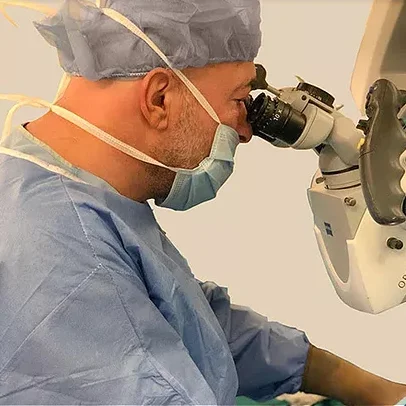
If a patient's sole or primary complaint is not infertility but rather "unbearable, refractory (resistant) pain caused by varicocele," the gold standard treatment protocol remains Subinguinal Microsurgical Varicocelectomy.
In a microsurgical operation performed meticulously by an experienced surgeon under a microscope, where not even a single small feeder vein is left behind, for a massive majority of patients (80-90%), varicocele pain is COMPLETELY ELIMINATED either from the moment they get off the operating table or within the following few weeks.
By ligating the veins (venous beds), the blood pooling in the testicle relieves in seconds. Patients often report during their follow-ups at the end of the first month, "Doctor, it feels like that heavy scrotum that had been numbing my leg, lower back, and testicle for months is gone; it feels as if a weight has been lifted off me," expressing an indescribable sense of relief. (In a very rare 5% group of patients with complicated nerve network issues, the pain may persist slightly, though it usually decreases; however, this is not an expected outcome for a routine varicocele patient.)
In Conclusion
To summarize; Does varicocele cause pain? It absolutely does. It disrupts the patient's psychology and impairs their social life and performance. Non-pharmacological methods and protective measures are futile and only provide temporary distraction. To prevent the damage this pain inflicts on your organs and sperm, and to get rid of that aching pain for a lifetime, the most definitive medical method is to undergo "Microsurgical Varicocele Surgery."
If you want to understand the fertility (infertility) risk behind the pain, you can read our article Does Varicocele Cause Infertility? or read our file on treatment processes: What Are the Treatment Options?.
Scientific References and Bibliography
This content has been prepared for medical accuracy based on international guidelines in the fields of urology and andrology, and clinical trials published in peer-reviewed medical journals.
- EAU Guidelines: Salonia, A., et al. "EAU Guidelines on Sexual and Reproductive Health." European Association of Urology, 2024. [Source/Link]
- AUA Guideline: Peterson, A. C., et al. "Evaluation and management of the man with scrotal pain." The Journal of Urology, 2010. [Source/Link]
- Scholarly Article: Altunoluk, B., et al. "Seminal reactive oxygen species assay in patients with varicocele and pain." Archives of Andrology, 2006. [Source/Link]
This content has been prepared by
Prof. Dr. Teoman Cem Kadıoğlu
Urology and Andrology Specialist