

Overview and Scientific Approach to Varicocele Treatment
The topic of varicocele treatment is one of the most speculated medical areas today, especially on the internet and social media. While the world's leading urology guidelines (EAU, AUA) clearly define varicocele disease as physiological damage and a "structural deterioration," patients unfortunately often turn to non-medical search paths far from modern medicine, such as "non-surgical treatment" or "herbal cures," which can lead to time loss and sometimes irreversible infertility processes.
To make the right decision for varicocele treatment, it is essential to understand the root of the disease, which is the enlarged vein structure with damaged valves (mechanical valvular insufficiency). Just as you cannot resolve a mechanical valve failure in your heart or legs by swallowing a pill, it is impossible to reverse a varicocele with medical drugs or massages.
The Most Critical Information to Know
According to all recognized medical and andrological authorities worldwide, the only definitive treatment for varicocele is SURGERY. Unfortunately, narrowing the enlarged veins of a varicocele or repairing the valves using medication or herbal nutrition models is technically not possible in modern medicine.
At Which Stage Should Varicoceles Be Treated? (Treatment Indications)
Another question we frequently encounter in the clinic is: "Doctor, my varicocele is grade 1 (mild); should I be treated immediately?" Diagnosing a varicocele does not mean performing surgery on the same day. The criteria for medical necessity (indications) to proceed with surgery instead of active surveillance (observation) are as follows:
- Male Infertility (Subfertility/Infertility): The inability of couples to achieve pregnancy despite 1 year of regular intercourse. In this case, if the semen analysis (sperm test) shows low sperm count, abnormal motility, or poor morphology (shape), and there is no obvious cause of female-related infertility, varicocele should be treated as the first choice (for clinical, non-subclinical varicoceles).
- Chronic and Severe Testicular Pain (Orchialgia): Regardless of infertility issues or marital status, if the pain caused by the enlarged veins severely disrupts the patient's daily and work activities, surgical treatment is decided. In the vast majority of patients, pain resolves completely after successful surgery.
- Loss of Testicular Volume (Asymmetry/Atrophy): Especially detected in patients aged 10-18 (adolescence). If a volume difference of more than 20% or 2 ml is detected between the two testes, surgical treatment must be planned promptly to prevent the arrest of sperm production and testicular growth.
- High Sperm DNA Fragmentation (DFI): Even if routine sperm count parameters appear normal, varicocele is treated if there is fragmentation in cellular genetics detected by advanced DNA damage tests in couples experiencing embryo losses in IVF processes and/or pregnancies resulting in miscarriages.
Cases Requiring No Treatment (Observation Only)
In the following patient profiles, immediate surgery is generally not recommended; instead, "observation" is advised, and patients are scheduled for follow-ups every 6 months to perform a semen analysis:
- Subclinical varicocele: Extremely early-stage findings where radiologists report a "mild enlargement or reflux" on Doppler ultrasound, but the andrologist cannot detect it during a physical examination.
- Single young patients who have no pain, no testicular atrophy, and whose semen analysis results are completely normal or well above average. (However, it should not be forgotten that varicocele is progressive, and an annual semen analysis must not be neglected.)
Varicocele Treatment Options: What Does Each Method Offer?
If you have an indication for treatment and need surgery, medical science offers four different models historically. The common philosophy of all these methods is to "eliminate the enlarged, problematic veins and stop the backward blood flow." However, there are significant differences in how this is done, the potential complications, and success rates:
1. Classical (Open) Inguinal Surgery
This is a conventional ligation surgery performed by entering the inguinal canal without a microscope or similar devices, relying only on the surgeon's naked eyes (or low-magnification surgical loupes).
Problem: While the veins are visible, the testicular artery and lymphatic vessels, which are critical to preserve, are often extremely difficult to distinguish by eye and can easily be ligated by mistake. This leads to massive fluid accumulation around the testis (hydrocele) in up to 20% of men after surgery, or even testicular atrophy (shrinkage) due to a ligated artery. The recurrence (relapse) rate of varicocele is also high, ranging from 15% to 25%. This method has been abandoned by all modern andrology guidelines (unless no other option or equipment is available).
2. Laparoscopic Varicocelectomy
This surgery is performed using cameras and manipulators inserted through three small incisions in the abdomen. In the abdominal anatomy, the testicular artery and problematic veins are located deep, and distinguishing lymphatic channels (and stripping them with instruments, even if camera magnification is sufficient) is not as successful as in microsurgery. It carries risks of organ injury, such as bowel damage, which a varicocele patient should never have to face. Although the recurrence rate is lower than in open surgery, it still reaches around 10%. Its necessity in modern technology is highly debated.
3. Radiological (Occlusive) Embolization - Sclerotherapy
This is a procedure where an interventional radiologist enters the large veins via a catheter through the groin skin, navigating to the impaired testicular veins to inject "blocking foam or metallic coils." It is similar to filling the veins internally.
Problem: Although the lack of general anesthesia is presented as an advantage, the chemical sclerosing agents used can sometimes leak into the testis or healthy veins, causing major complications. Since blocking the entire intricate branching network of veins within the vessel is difficult, the recurrence rate in embolization is quite high (15-20%). Exposure to radiation (X-ray) is another drawback.
4. Gold Standard: Microsurgical Varicocele Surgery
This is the only procedure that indisputably yields the most successful results in global literature, minimizing all complication rates. It was introduced to the medical community in Turkey in 1992 under the leadership of Professor Dr. Teoman Cem Kadioglu, and thousands of successful results have been achieved.
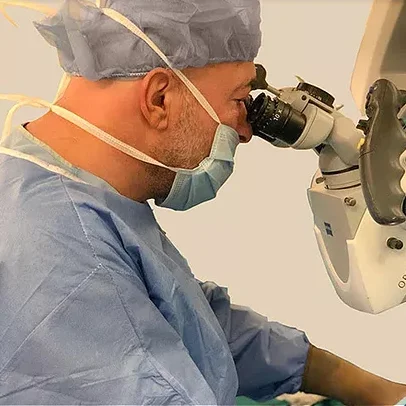
- It is performed under a microscope (10-20X optical magnification). The testicular artery stands out clearly; it is NEVER cut. Testicular blood supply is guaranteed!
- All lymphatic channels are observed and carefully spared; the risk of HYDROCELE (fluid accumulation and swelling in the scrotum) is nearly 0.1%.
- Even the smallest 0.5 mm veins that could cause leakage, invisible to the naked eye, are detected under the microscope and ligated individually. The risk of RECURRENCE (varicocele returning years after surgery) is at most 1% (practically almost impossible).
Performed through a tiny 3 cm aesthetic subinguinal incision (in the groin, not the scrotum), patients are comfortably discharged from the hospital on the same day, walking out on their own.
The Relationship Between Antioxidant Medications, Vitamins, and Varicocele Treatment
If you are not undergoing surgery and will remain under surveillance, or if you must postpone your surgical plan for several months, your physician may prescribe various antioxidant supplements or vitamin derivatives (L-Carnitine, Co-Enzyme Q10, Vitamin E, Zinc, etc.), knowing that they cannot repair the underlying diseased veins.
The goal here is to locally suppress and partially eliminate the "Reactive Oxygen Species (Free Oxygen Radicals)" generated by the varicocele in testicular metabolism, which cause the actual toxic damage to the sperm. However, this treatment is palliative; it does not CURE the disease, but merely temporarily suppresses the symptoms (sperm fatigue and poor quality). Once the medication is discontinued, sperm quality returns to its initial poor levels because the diseased varicocele veins continue to pool blood.
When is the Success of the Treatment (Sperm Increase) Determined?
In a man who has undergone successful microsurgical varicocele surgery (where the testis is never touched during the operation), the pooled blood is cleared within seconds, and the testis begins to cool down and recover. However, the positive reflection of this improvement on sperm count, morphology, and motility (semen analysis) requires a patient wait.
In human testicular anatomy and the spermatogenesis process, it takes approximately 74 to 90 days (roughly 3 months) for a stem cell to be rebuilt, divide, develop, acquire a tail, mature, and become a motile mature sperm ready for ejaculation. Therefore, performing a semen analysis 15 days or 1 month after surgery is futile, meaningless, and misleading.
The most accurate success data will be determined by the semen analysis report performed at the end of the 4th or, more clearly, the 6th month following surgery.
To Summarize:
When it comes to varicocele treatment, wasting time on superstitious alternative medicine (leeches, ice massages, wearing tight underwear) or "pill/capsule swallowing" sessions that offer nothing more than a loss of money is a major clinical error. If the indication for your condition is established, and you suffer from clinical varicocele symptoms or know that this condition is the obstacle to having a child, undergoing Microsurgical Varicocele Surgery, which offers a 99% definitive solution and makes recurrence virtually impossible, is the sole and most rational decision.
For a detailed analysis of how the operation is performed, hospital comfort, or the incision size, you can carefully review our Varicocele Surgery page. If you wish to understand the dynamics of the disease related to infertility, you can read our article Does Varicocele Cause Infertility?.
This content has been prepared by
Prof. Dr. Teoman Cem Kadioglu
Urology and Andrology Specialist