

Varicocele and Male Reproductive Health: Direct Relationship with Infertility
The most anxious and common question that patients ask andrology/urology specialists is undoubtedly: "Does varicocele cause infertility? Will I not be able to have children?" To establish a clear medical context: Yes, varicocele is the number one identifiable and correctable anatomical cause of male infertility in modern medicine.
However, this should not be reduced to a radical and incorrect conclusion like "every man with a varicocele will definitely be infertile." When statistics are analyzed, varicocele is seen in 1 out of every 6 men (15-20%) in the general population. Yet, not all of these men with varicocele are infertile. The interesting fact that proves the strong link between varicocele and infertility is this: varicocele is found in 40% of men presenting with suspected infertility (primary infertility)—i.e., those who say, "We got married, but we cannot have a child." For men who have previously had children but cannot have a second or third child (secondary infertility), varicocele is detected at a shocking rate of 80%!
Did You Know?
Varicocele is a progressive disease. The fact that a man was able to have a child in his 20s does not mean he will achieve the same success in his 30s. Over time, varicocele continues to damage the testes, making it the most common cause of "secondary infertility" (infertility that develops later in life).
How Does Varicocele Impair Testicles and Sperm Production? The Damage Dynamics
For a normal pregnancy to occur, millions of sperm cells in the male testicles (spermatogenic tubules) must mature through a flawless developmental line lasting about 72 to 90 days. Sperm cells are the most delicate biological structures in the human body, highly sensitive to heat and toxins. Varicocele attacks this delicate production factory from three main fronts:
- Increased Testicular Temperature (Hyperthermia): The anatomical positioning of the testicles outside the body (within the scrotum) is not a coincidence. Ideal sperm production occurs around 34.5°C (1.5 to 2 degrees Celsius cooler than core body temperature). In varicocele cases, blood that pools in the testicles due to damaged vein valves acts like a liquid heater, raising the temperature inside the scrotum to 37°C. This increased heat destroys sperm precursor cells (spermatogonia).
- Severe Oxidative Stress Attack: The stagnation of venous blood in the testicles for hours (venous stasis) increases free radicals (reactive oxygen species) in that region. The nuclear membranes of mature sperm, which carry a very delicate genetic package, are damaged by these radicals, leading to sperm DNA fragmentation.
- Toxic Renal Metabolites: The left testicular vein is anatomically connected to the left renal vein. While there should normally be no backward flow, in patients with varicocele, toxins returning from the kidneys and adrenal glands "flow back" into the testicle. Hormones like cortisol and catecholamines cause serious biochemical damage to the testicular tissue.
The Tangible Impact of Varicocele on Semen Analysis (Spermiogram) Results
According to the World Health Organization (WHO 2021) criteria, a man with normal fertility potential should have a sperm concentration of at least 16 million per ml, progressive motility (sperm moving forward rapidly and slowly) of over 30%, and normal morphology (sperm structure under the microscope including tail, neck, and head) of at least 4% (strict Kruger criteria).
Varicocele can degrade semen analysis parameters into the following pathological forms:
- Oligozoospermia (Low Sperm Count): Due to stem cell death caused by high temperatures, the sperm count can drop from millions to thousands, and sometimes even down to single digits.
- Asthenozoospermia (Poor Sperm Motility): Sperm affected by varicocele suffer from impaired mitochondria (which produce energy/ATP), diminishing their ability for progressive (forward) motility. The sperm may only twitch in place and lack the energy to swim through the female reproductive tract toward the fallopian tubes, severely lowering the chances of natural conception.
- Teratozoospermia (Abnormal Morphology): Heat and toxins disrupt the sperm production machinery to such an extent that abnormal sperm with head defects (e.g., pinheads, double heads) or tail defects (e.g., short or bent tails) are produced (morphology 0-1%). Sperm with these structural anomalies cannot penetrate the outer layer of the female egg.
The Hidden Threat of Infertility: DNA Fragmentation Index (DFI) and Varicocele
In modern andrology, the most critical revolution in infertility assessment is "Sperm DNA Fragmentation Tests" (such as TUNEL, SCSA, Halosperm). Sometimes patients receive semen analysis results with excellent parameters, such as a sperm count of "60 million" and 50% motility. Believing, "I am not infertile; I have a varicocele but my sperm is healthy," they continue trying to conceive for years. However, their partner either fails to get pregnant or suffers a miscarriage (early abortion).
The primary reason for this is the invisible blow dealt by varicocele: DFI (DNA Fragmentation Index), which measures sperm DNA damage. Although abundant and motile sperm may succeed in fertilizing the egg, the paternal DNA strands they carry are broken or damaged due to varicocele-induced oxidative stress. The egg inside the uterus may reject this "damaged DNA" sperm, or even if an embryo forms, it often leads to a miscarriage within the 6th to 8th weeks. Extensive studies have documented that a high percentage of patients with varicocele have a DNA fragmentation index in the dangerous range (above 25%).
Is Varicocele Surgery Necessary Before IVF (Intra-Cytoplasmic Sperm Injection - ICSI)?
One of the most debated topics in our andrology clinic and among gynecologist colleagues is the dilemma of: "Should we proceed immediately to IVF/ICSI without wasting time, or should we first treat the male partner with microsurgical varicocele surgery?"
International medical consensus (EAU/ASRM guidelines) and our extensive clinical experience clearly point to the following conclusions:
- Sparing the Female Partner from Exhausting Procedures: IVF is a challenging and demanding process for the female partner, involving heavy hormonal loads, daily injections to stimulate egg growth, and egg retrieval under anesthesia. When there is a chance to enable natural fatherhood through a relatively simple microsurgical operation on the male partner (which takes about 40 minutes under anesthesia), rushing directly into IVF is a highly stressful alternative.
- Increasing the Success Rate of IVF: Even if urgent IVF is required due to the age or ovarian reserve of the mother-to-be, entering IVF with sperm whose DNA has been fragmented by varicocele decreases success. Such embryos may fail to divide in the laboratory or lead to a miscarriage in the womb. To improve IVF success rates, microsurgical varicocele surgery should be performed beforehand to reduce DNA damage.
Can I Become a Father If I Have Varicocele Surgery? Recovery Timeline
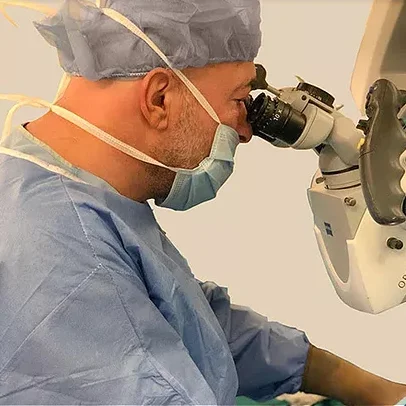
A successful microsurgical varicocele surgery is the gold standard procedure that yields the highest efficiency in resolving varicocele-related infertility. Unlike the high failure rates associated with conventional operations, this procedure utilizes a high-power microscope to ligate all abnormal veins while carefully preserving the testicular artery (preventing testicular atrophy):
A significant physiological improvement in semen parameters (count, morphology, and motility) is observed in 70% to 80% of patients starting from the 6th month post-surgery. Striking drops in the DNA Fragmentation Index are also noted. Within the first year following the operation, the rate of natural conception (spontaneous pregnancy) for partners of our patients can reach 40% to 50% (assuming no female fertility issues). Even if assisted reproductive technologies are still required, going into the process with repaired, high-quality sperm increases their chances of success manifold.
Summary: The Decision on Infertility and Varicocele
If your dream of becoming a father has not yielded results despite one year of trying, and your semen analysis shows low motility or a low sperm count, or if consecutive miscarriages have affected your family, the first correct step is a detailed physical examination by an experienced andrology/urology specialist.
Varicocele does not have to be a permanent obstacle that condemns you to costly IVF treatments or the distress of unexplained infertility. Following an accurate diagnosis, undergoing a microsurgical varicocele surgery by Prof. Dr. Teoman Cem Kadıoğlu offers a concrete biological pathway to fathering a child with healthy, stress-free sperm.
To read in detail about specific treatment options, you can visit the How is Varicocele Treated? section, or review our surgical procedure step-by-step in the How is Microsurgical Varicocele Surgery Performed? section.
Scientific References and Bibliography
This content has been prepared for medical accuracy based on international guidelines and clinical studies published in peer-reviewed medical journals in the fields of urology and andrology.
- AUA/ASRM Guideline: Schlegel, P. N., et al. "Diagnosis and treatment of infertility in men: AUA/ASRM guideline." The Journal of Urology, 2021. [Source/Link]
- Scholarly Article: Agarwal, A., et al. "Role of oxidative stress in pathophysiology of varicocele." Frontiers in Bioscience, 2006. [Source/Link]
- WHO Semen Manual: World Health Organization. WHO Laboratory Manual for the Examination and Processing of Human Semen (6th Edition), 2021. [Source/Link]
This content has been reviewed and approved by
Prof. Dr. Teoman Cem Kadıoğlu
Urology and Andrology Specialist